Huikaau | where currents meetHuikaau – where currents meet celebrates the past, present, and future of the Dunedin Public Art Gallery collection – Aotearoa’s first civic collection of art, which was established in Ōtepoti Dunedin in 1884. This exhibition upholds the stories and ideas carried within the collection, welcomes new arrivals, and continues to work in partnership to bring Māori and indigenous perspectives to the fore.
Te Paparahi Toi Māori‘Te Paparahi Toi Māori’ the Auckland Art Walk guide, which brings Māori culture and history to life in the city’s public spaces for Aucklanders and tourists to explore.
Taimoana | Coastlines: Art in AotearoaTaimoana | Coastlines explores the art of Aotearoa New Zealand, locating it within Te Moana-nui-a-Kiwa, the wider Pacific region. Taking the concept of the coast, or shoreline, as a starting point, the exhibition navigates a sea of ideas, offering multiple perspectives on New Zealand art through a selection of works from the collection of Auckland Art Gallery Toi o Tāmaki.
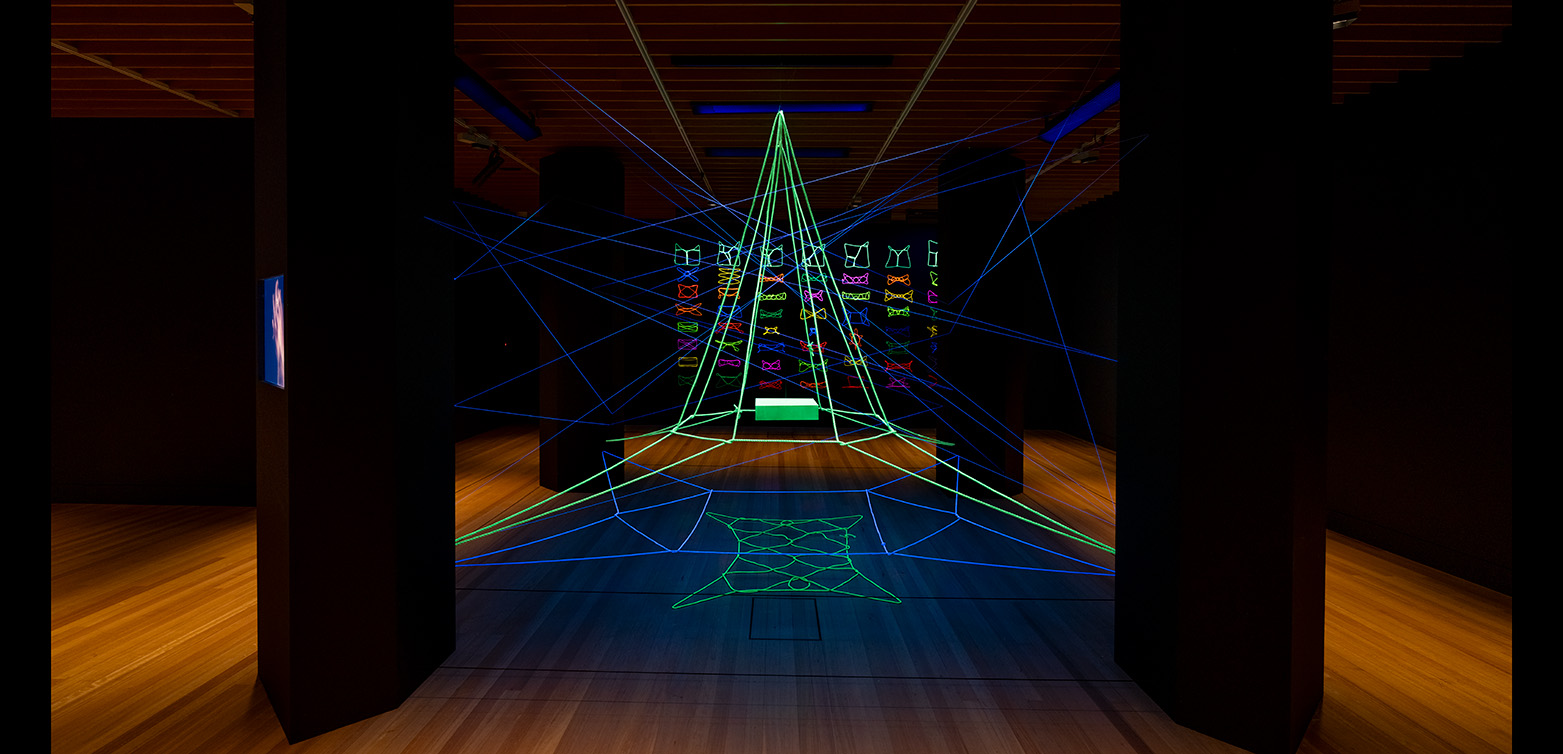
Ata Huna, Ata Whai | Threads of ConnectionFrom dazzling UV-light installations to delicate work in harakeke, experience the art of Maureen Lander (Ngāpuhi, Te Hikutu, Pākehā). Lander is one of News Zealand's foremost expert on raranga and a master weaver herself.
📸 Maarten Holl.
TētēkuraTwo monumental artworks - one made from burnt timber, the other from fired clay. An unmissable opportunity to encounter two icons of contemporary Māori art.
📸 Jane Harris. Te Papa
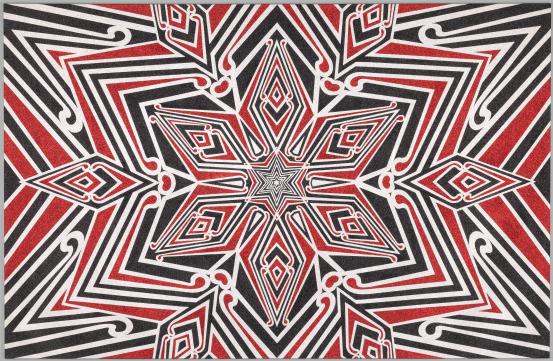
GroundedGrounded invites visitors to see land not just as terrain, but as a foundation for exploring ecology, sovereignty, memory, and home. Featuring 35 artists based in the Americas and the Pacific, the exhibition showcases 40 works, spanning the 1970s to today, with many on view for the first time. Works include Lisa Reihana’s monumental video installation In Pursuit of Venus [infected] that reimagines colonial narratives from her perspective as a Māori artist; photographs and video by Clarissa Tossin, Laura Aguilar, and Ana Mendieta that trace the artists’ bodies in dialogue with the earth; paintings and sculptures by Eamon Ore Girón, Courtney M. Leonard, and Rose B. Simpson that blend technology with Indigenous iconography and craft; and works by Leslie Martinez and Abraham Cruzvillegas that upcycle everyday materials to document consumption and to suggest possibilities for renewal.
Living ArchivesDelving into art and archives from the Christchurch Art Gallery Te Puna o Waiwhetū collections, Living Archives charts personal stories about artists and history in Aotearoa. By drawing on the legacy of art historians Jonathan Mane-Wheoki, Julie King and Karen Stevenson, the exhibition focuses on intergenerational relationships, artistic lineage and creative networks.
Image: Lonnie Hutchinson (Ngāti Kuri, Ngāi Tahu, Sāmoan, Māori, Pasifika, Scottish, English)
Comb (black), 2011, Paint on steel, Karen Stevenson Collection, presented 2022
Does the flower hear the bee?: 15th Shanghai Biennale 15th Shanghai Biennale: Does the flower hear the bee? takes place from 8 November 2025 to 31 March 2026 at the Power Station of Art, 200 Hua Yuan Gang Lu, Huangpu Qu, Shanghai, China.
Titled Does the flower hear the bee?, the 15th Shanghai Biennale will explore new modes of sensorial communication between artwork, audience and environment. Inspired by recent scientific discoveries regarding interactions between honeybees and the flowers that “hear” the vibration of their wings, the exhibition operates at the intersection of differing models of intelligence, both human and nonhuman.
Featuring over 250 works by 67 individual artists and collectives, from China and around the world, the Biennale’s hopeful vision rests on art’s ability to orient us towards the unknown, the future. Conceived in collaboration with a global array of artists, curators, intellectuals, musicians, poets, scientists and writers, Does the flower hear the bee? recognizes that much depends on our ability to sense the world around us and attune ourselves to its diverse variety of intelligences.
Art of the PacificNGV INTERNATIONAL
180 St Kilda Road, Melbourne
This display brings together works by artists and designers from Polynesia, Micronesia and Melanesia (including the Torres Strait). Spanning diverse periods, places and media – including photography, printmaking, painting, sculpture, video, fashion, tapa and lei – these works explore both contemporary innovation and the preservation of customary cultural practices. Seen together, these works highlight the vitality of art from the Pacific, and its role as a powerful vehicle for storytelling, ceremony, resistance and the transmission of culture across generations.
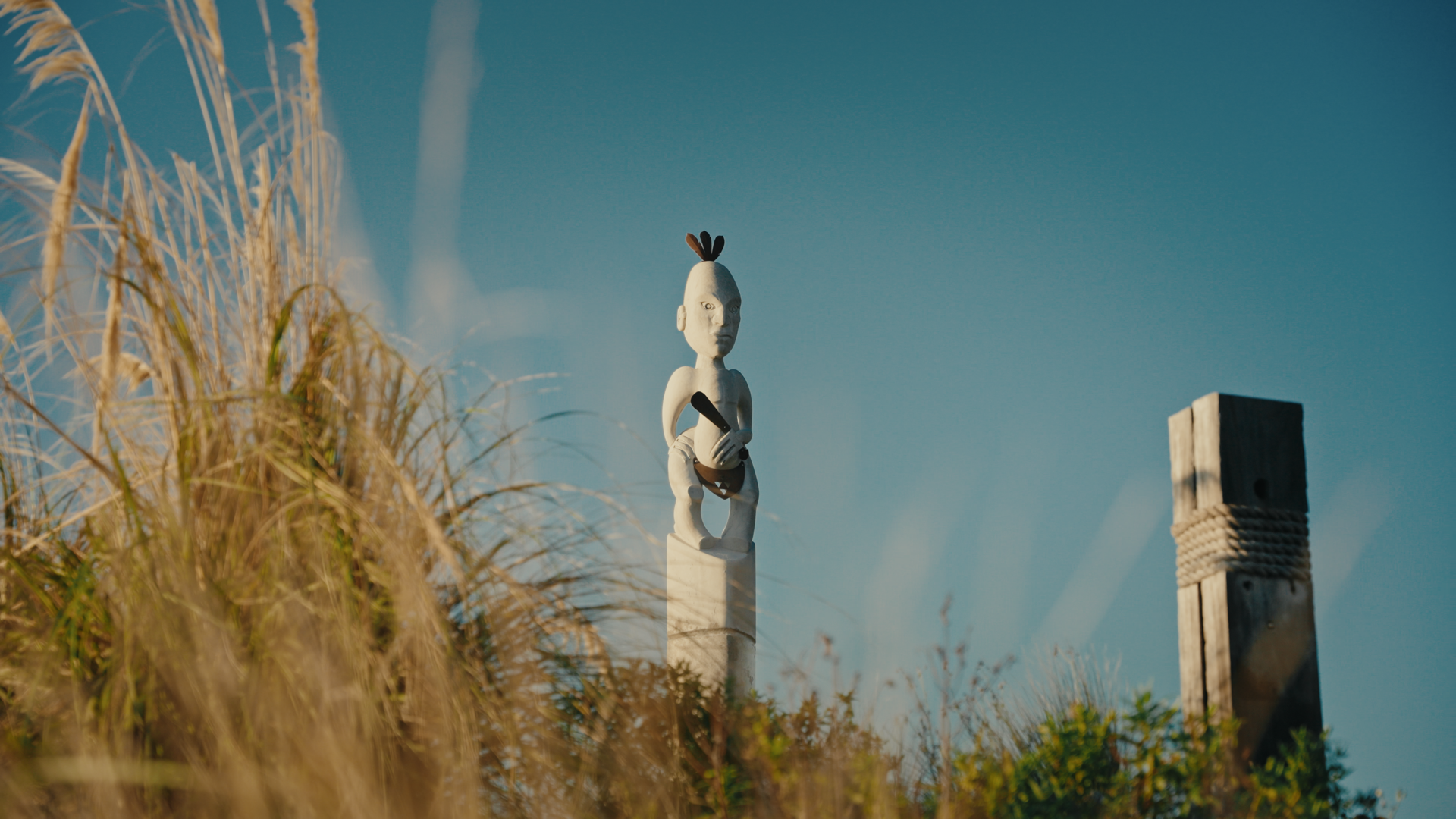
WhakairoStep into a vast space, where tradition is not only preserved, but transformed – where the carved line becomes light, movement and code.
Whakairo by Kereama Taepa is a bold fusion of tradition and technology, in which the ancestral art of Māori whakairo (carving) meets the evolving language of augmented reality (AR). In this interactive exhibition, Taepa explores the role of whakairo in contemporary Aotearoa, extending its presence beyond physical form into the digital realm.
Land of My AncestorsThis exhibition is a deeply personal retrospective that honours the artist’s whakapapa (heritage, family line), life journey and enduring legacy in Māori art. Presented for the first time in Tauranga Moana, this major exhibition draws together a curated selection of drawings, paintings, jewellery, and carvings spanning nearly six decades of practice. It is both a homecoming and a tribute to the ancestors, landscapes and stories that have shaped his world.
whai wāhiAn exhibition spanning from the 1970s to today, Whai Wāhi brings together sculpture, photography, painting, installation, and moving image to explore voices of mana motuhake, resistance, and reflection on Te Tiriti. The works assert Māori agency and invite ongoing dialogue about Aotearoa’s shared colonial history and the pursuit of space and sovereignty.
Image: Melanie Tangaere Baldwin, Matekite (2023)
Kaikōura Cultural Artwork TrailAlong the 60km scenic stretch of State Highway 1 from Oaro to Waiau Toa (Clarence River), experience this unique art trail centred around seven safe stopping places. Pull over to see murals, pouwhenua and tekoteko (carved pillars), beautiful native planting and information panels that share the rich stories of the hapū of Kaikōura.
Katohia He Wai Moou, Katohia He Wai MookuPresented alongside the survey exhibition Fred Graham: Toi Whakaata / Reflections, this exhibition provides a focused, in-depth look at Graham’s body of work made about the Waikato River.
This exhibition features a series of works that trace significant places and historic sites along the Waikato awa. Rich with symbolism, the exhibition tracks the length of Aotearoa New Zealand’s largest river from its beginnings at Mount Ruapehu to the powerful currents rushing past the Museum, and onwards to the sea at Te Puuaha o Waikato (Port Waikato).
Image: Fred Graham, Te Puaaha o Waikato (Port Waikato), kauri, swamp kauri, paua shell, custom wood, 2012. Courtesy of the Waikato River Authority.
Toi Whakaata / ReflectionsReflecting on Fred Graham’s art practice of over 70 years, this exhibition includes significant works made between 1965 and 2013, with an emphasis on the artist’s small-scale freestanding sculptures and relief works. The exhibited pieces demonstrate the development of Graham’s distinctive visual language, which intersects Māori and European art traditions and combines wood, stone and stainless steel.
Image: Fred Graham, Toi Whaakata / Reflections, installation view, Te Uru, 2024, courtesy of the artist and Te Uru. Photo by Samuel Hartnett.
Ralph Hotere CollectionThis collection comprises more than 60 graphic works and paintings by major New Zealand contemporary artist Ralph Hotere. A long-time supporter of the Eastern Southland Gallery, Hotere chose to gift 36 lithographs to Gore in 2001.
Manu TakiBringing together new major artworks alongside significant historical and contemporary works, Manu Taki explores the enduring role of birds within Aotearoa’s art history. As layered symbols and as both physical and metaphorical conduits, manu are inextricably linked to ideas of place, value, and identity. Simultaneously looking to the past and the future, the exhibition asks not only how we see birds, but what our relationship with them reveals about ourselves; our responsibilities, the stories we tell, and the values we choose to uphold.
After the undercurrentsAfter the undercurrents
Gordon Bennett,Emily Karaka
31 January – 11April 2026
Te Tiriti o Waitangi - KotahitangaMa te kotahitanga e whai kaha ai tātou katoa
In unity there is strength
Waiheke Art Gallery, in collaboration with Waiheke mana whenua Ngāti Pāoa, is hosting its annual Tiriti o Waitangi exhibition.
Kotahitanga is a dynamic, thought-provoking exhibition featuring a stellar line-up of contemporary Aotearoa artists. This year’s exhibition is brought to you in association with Tim Melville and Paul Nache galleries.
Image: Nephi Tupaea, Tupuarangi, 2025 (Courtesy Tim Melville Gallery. Photo: Kallan MacLeod)
All the World’s MemoriesUNSW Galleries - Cnr Oxford St & Greens Rd Paddington NSW 2021
‘All the World’s Memories’ brings together 10 artists from Australia and Aotearoa whose practices consider how memory can be seen and understood.
Fiona Clark
J Davies
Nick FitzPatrick
Matthew Harris
Pat Hoffie
Ana Iti
Zac Langdon-Pole
Lillian O’Neil
Grant Stevens
Desmond Woodforde
The exhibition’s title references Toute la mémoire du monde 1956, Alain Resnais’s short film on the ambition (and ultimate impossibility) of preserving human knowledge. Following a book through the Bibliothèque nationale de France, from classification to storage and circulation, the film presents the library as a site where memories are abstracted from lived experience and rendered only legible through institutional authority.
Curated by José Da Silva
TAU ATU E!An exhibition of mahi toi by Bethany Matai Edmunds-Cook (Ngāti Kuri), featuring woven taonga sculpted from Far North fibres and celebrating the natural colours of our taiao. The exhibition speaks to return, reconnection, and landing - replanting roots back into Muriwhenua through contemporary Māori art practice.
ConFluentVisual artists and poets were invited to meet, pair up and work together to create original works in their respective disciplines. The results of these collaborative partnerships are presented in ConFluent.
ihumaneaPresented by Te Ātinga – Māori Visual Arts Committee, this exhibition celebrates the collective momentum of mahi toi, honouring the shared knowledge, intuition, and creative contributions of its members.
Featuring artists from across Aotearoa, the exhibition showcases a diverse selection of works that reflect each member’s unique journey. Through these pieces, their voices and visions converge grounded in whakapapa, enriched by place and community that they are part of.
Image: Dorothy Waetford
Pause, act, void, eventHere, “life” takes on many meanings. It could gesture to the unstable and surprising nature of materials, which—despite the best efforts of the institution to halt decay—act in ways that exceed human intention, and inevitably change over time. It could speak to the ways artists transform earthly matter to come to terms with, reclaim, and regenerate ways of seeing, feeling, knowing and being in the world. Life, or liveness, may also signal the aspirations artists hold for artworks to act in service of transformation—to play an active role within the world, or in struggles against injustice.
WhakamanaWhakamana means to give authority, give effect, give prestige, to confirm, enable, authorise, legitimise, empower, validate and enact. For Darryn George, whakamana is not an abstract concept; it is relational, personal, and culturally rooted. The works in Whakamana are grounded in acknowledgement, remembrance, and restoration. The title speaks to the act of honouring and upholding the mana of people, both those whose names are known and those whose influence has quietly shaped the artist’s life. By giving them space within the gallery, George elevates these quiet contributions, affirming that mana is not dependent on visibility or status.
Waiora Te Ūkaipō - The HomelandSet in the summer of 1965, Waiora follows Hone, who brings his whānau from the East Cape to the South Island in search of a better life.
As they gather for a beachside birthday hāngī with their Pākehā guests, buried secrets and cultural tensions rise to the surface. Far away from home, can they find a place to stand together or will they be set adrift in an ocean of change?
First performed in 1996, Waiora is a landmark piece of Aotearoa theatre exploring the impact of colonisation, the urban drift, and the tension between past and future. Multi-award-winning writer Hone Kouka returns to direct his own powerful reflection on family, culture and belonging.
Making lands A celebration of “the ingenuity of a remote and resourceful culture” and the designers shaping Aotearoa’s future of making.
Furniture, lighting, textiles, objects and more — from 3D printing to weaving, carving to welding.
Held at Silo 6, Beaumont Street &, Jellicoe Street, Auckland Central, Auckland
AupikiManaia Carswell's first solo exhibition 'Aupiki', explores different aspects of herself, her whakapapa and what it means to be māori today.
Using muka, harakeke and the Māori art of weaving raranga and whatu, she will create installations that will offer up a different perspective.
Ngahere Behind a Pile of MetalAn immersive installation considering the legacies of deforestation and significance of kauri trees.
In this new commission, Ana Iti (Te Rarawa, Ngāi Tūpoto, Ngāti Here) references kauri logging, an industry that flourished in Te Tai Tokerau during the nineteenth century. Drawn using charcoal from burnt kauri timber, large saw teeth cut into the substructure of the gallery. Chain and metal pipes hint at the form of a marine crane, or how logs are bound for transport in waterways. The relationship of rākau to wai, or tree to water, reflects the kinship of kauri to tohorā, the Southern right whale. Both now face the threat of extinction, a sign of broader ecological devastation.
Ana Iti, research image 2025
The Sound of Your VoiceChris Heaphy’s latest exhibition The Sound of Your Voice develops an ongoing enquiry into identity through cultural exchange, amalgamation and juxtaposition. Underpinned by a deeply personal response to questions such as ‘who are we?’ and ‘what does it mean to live here in Aotearoa?’, Heaphy’s work maintains an openness, encouraging the viewer to engage with the exhibition through a lens of personal perception and experience. Employing the silhouette as a vessel to carry narrative, there is a directness to Heaphy’s visual language, while over time an unfolding or unveiling of complexities inherent to the enquiry appear.
Said in Present Tense, 2026, acrylic on Belgian linen, 300 x 250mm
ONO with Moana & the TribeIn celebration of International Women’s Day, Moana & the Tribe present ONO, their latest album that begins in Aotearoa and travels the world.
Six Indigenous women are featured in a hybrid of live performance and video showcase infused with sublime vocals, kapa haka and dance prowess, and funky electronic-dub beats.
Lyrics in te reo Māori pay homage to the power of people, relationships and language. With visiting musicians Shellie Morris from Australia and Kaumakaiwa Kanaka’ole from Hawai’i, alongside breathtaking visuals from the highlands of Scotland, Arctic Circle and beyond, this is a music experience that reinforces the values of hope and unity.
THE PILLARSIn that delicate hinge ofdawn and dusk, the world holds its breath. Darkness becomes a medium, the veil thins, first breaths are drawn, and departing souls exhale their last. The Pillars by Reuben Paterson is the invitation and an opening into this suspended,shimmering threshold. To enter is to move among living trees rising ask aitiaki, parting the ordinary to make way for a realm where whakapapa flows in multiple directions, where past, present, and emergent time coexist without hierarchy. Foreground and background collapse; human and non-human, earthly andstellar, ancestral and speculative move together. And like all thresholds, itrequires an invitation — an opening of the senses, a calling-in, a small spell tomark the crossing. In this world, beings hold attention without fear, without hurry, as if harm itself has been suspended, turning gently toward us,welcoming our presence into their place.
Extract from Dina Jezdić's essay Thresholds commissioned to accompany The Pillars.
Navigating SlowlyNavigating Slowly interrogates our relationships with whenua by demonstrating forms of traversal that are slow, that are circuitous or circular, that give still time to place, seeking out new knowledge in the land via reversals, retreats, returns, and hauntings. The programme brings together contemporary artists from Aotearoa who share a meditative approach in their visual practice that runs counter to the accelerated narratives of colonialism and capitalism. The works sit with whenua, telling tales of travel, whakapapa, geology, language, and wairua.
Whakairo Conversations Join us on Saturday 21 March for a special double session exploring whakairo through engaging, thought-provoking kōrero.
11am–12pm: Dean Flavell
12–1pm: Break
1–2pm: Dr. Lyonel Grant
Come to one or stay for both, either way, it’s going to be powerful. FREE but registrations are essential, so book your place now!
Lonnie HutchinsonDetails to come
Huikaau | where currents meetHuikaau – where currents meet celebrates the past, present, and future of the Dunedin Public Art Gallery collection – Aotearoa’s first civic collection of art, which was established in Ōtepoti Dunedin in 1884. This exhibition upholds the stories and ideas carried within the collection, welcomes new arrivals, and continues to work in partnership to bring Māori and indigenous perspectives to the fore.
Te Paparahi Toi Māori‘Te Paparahi Toi Māori’ the Auckland Art Walk guide, which brings Māori culture and history to life in the city’s public spaces for Aucklanders and tourists to explore.
Taimoana | Coastlines: Art in AotearoaTaimoana | Coastlines explores the art of Aotearoa New Zealand, locating it within Te Moana-nui-a-Kiwa, the wider Pacific region. Taking the concept of the coast, or shoreline, as a starting point, the exhibition navigates a sea of ideas, offering multiple perspectives on New Zealand art through a selection of works from the collection of Auckland Art Gallery Toi o Tāmaki.
Ata Huna, Ata Whai | Threads of ConnectionFrom dazzling UV-light installations to delicate work in harakeke, experience the art of Maureen Lander (Ngāpuhi, Te Hikutu, Pākehā). Lander is one of News Zealand's foremost expert on raranga and a master weaver herself.
📸 Maarten Holl.
TētēkuraTwo monumental artworks - one made from burnt timber, the other from fired clay. An unmissable opportunity to encounter two icons of contemporary Māori art.
📸 Jane Harris. Te Papa
GroundedGrounded invites visitors to see land not just as terrain, but as a foundation for exploring ecology, sovereignty, memory, and home. Featuring 35 artists based in the Americas and the Pacific, the exhibition showcases 40 works, spanning the 1970s to today, with many on view for the first time. Works include Lisa Reihana’s monumental video installation In Pursuit of Venus [infected] that reimagines colonial narratives from her perspective as a Māori artist; photographs and video by Clarissa Tossin, Laura Aguilar, and Ana Mendieta that trace the artists’ bodies in dialogue with the earth; paintings and sculptures by Eamon Ore Girón, Courtney M. Leonard, and Rose B. Simpson that blend technology with Indigenous iconography and craft; and works by Leslie Martinez and Abraham Cruzvillegas that upcycle everyday materials to document consumption and to suggest possibilities for renewal.
Living ArchivesDelving into art and archives from the Christchurch Art Gallery Te Puna o Waiwhetū collections, Living Archives charts personal stories about artists and history in Aotearoa. By drawing on the legacy of art historians Jonathan Mane-Wheoki, Julie King and Karen Stevenson, the exhibition focuses on intergenerational relationships, artistic lineage and creative networks.
Image: Lonnie Hutchinson (Ngāti Kuri, Ngāi Tahu, Sāmoan, Māori, Pasifika, Scottish, English)
Comb (black), 2011, Paint on steel, Karen Stevenson Collection, presented 2022
Does the flower hear the bee?: 15th Shanghai Biennale 15th Shanghai Biennale: Does the flower hear the bee? takes place from 8 November 2025 to 31 March 2026 at the Power Station of Art, 200 Hua Yuan Gang Lu, Huangpu Qu, Shanghai, China.
Titled Does the flower hear the bee?, the 15th Shanghai Biennale will explore new modes of sensorial communication between artwork, audience and environment. Inspired by recent scientific discoveries regarding interactions between honeybees and the flowers that “hear” the vibration of their wings, the exhibition operates at the intersection of differing models of intelligence, both human and nonhuman.
Featuring over 250 works by 67 individual artists and collectives, from China and around the world, the Biennale’s hopeful vision rests on art’s ability to orient us towards the unknown, the future. Conceived in collaboration with a global array of artists, curators, intellectuals, musicians, poets, scientists and writers, Does the flower hear the bee? recognizes that much depends on our ability to sense the world around us and attune ourselves to its diverse variety of intelligences.
Art of the PacificNGV INTERNATIONAL
180 St Kilda Road, Melbourne
This display brings together works by artists and designers from Polynesia, Micronesia and Melanesia (including the Torres Strait). Spanning diverse periods, places and media – including photography, printmaking, painting, sculpture, video, fashion, tapa and lei – these works explore both contemporary innovation and the preservation of customary cultural practices. Seen together, these works highlight the vitality of art from the Pacific, and its role as a powerful vehicle for storytelling, ceremony, resistance and the transmission of culture across generations.
WhakairoStep into a vast space, where tradition is not only preserved, but transformed – where the carved line becomes light, movement and code.
Whakairo by Kereama Taepa is a bold fusion of tradition and technology, in which the ancestral art of Māori whakairo (carving) meets the evolving language of augmented reality (AR). In this interactive exhibition, Taepa explores the role of whakairo in contemporary Aotearoa, extending its presence beyond physical form into the digital realm.
Land of My AncestorsThis exhibition is a deeply personal retrospective that honours the artist’s whakapapa (heritage, family line), life journey and enduring legacy in Māori art. Presented for the first time in Tauranga Moana, this major exhibition draws together a curated selection of drawings, paintings, jewellery, and carvings spanning nearly six decades of practice. It is both a homecoming and a tribute to the ancestors, landscapes and stories that have shaped his world.
whai wāhiAn exhibition spanning from the 1970s to today, Whai Wāhi brings together sculpture, photography, painting, installation, and moving image to explore voices of mana motuhake, resistance, and reflection on Te Tiriti. The works assert Māori agency and invite ongoing dialogue about Aotearoa’s shared colonial history and the pursuit of space and sovereignty.
Image: Melanie Tangaere Baldwin, Matekite (2023)
Kaikōura Cultural Artwork TrailAlong the 60km scenic stretch of State Highway 1 from Oaro to Waiau Toa (Clarence River), experience this unique art trail centred around seven safe stopping places. Pull over to see murals, pouwhenua and tekoteko (carved pillars), beautiful native planting and information panels that share the rich stories of the hapū of Kaikōura.
Katohia He Wai Moou, Katohia He Wai MookuPresented alongside the survey exhibition Fred Graham: Toi Whakaata / Reflections, this exhibition provides a focused, in-depth look at Graham’s body of work made about the Waikato River.
This exhibition features a series of works that trace significant places and historic sites along the Waikato awa. Rich with symbolism, the exhibition tracks the length of Aotearoa New Zealand’s largest river from its beginnings at Mount Ruapehu to the powerful currents rushing past the Museum, and onwards to the sea at Te Puuaha o Waikato (Port Waikato).
Image: Fred Graham, Te Puaaha o Waikato (Port Waikato), kauri, swamp kauri, paua shell, custom wood, 2012. Courtesy of the Waikato River Authority.
Toi Whakaata / ReflectionsReflecting on Fred Graham’s art practice of over 70 years, this exhibition includes significant works made between 1965 and 2013, with an emphasis on the artist’s small-scale freestanding sculptures and relief works. The exhibited pieces demonstrate the development of Graham’s distinctive visual language, which intersects Māori and European art traditions and combines wood, stone and stainless steel.
Image: Fred Graham, Toi Whaakata / Reflections, installation view, Te Uru, 2024, courtesy of the artist and Te Uru. Photo by Samuel Hartnett.
Ralph Hotere CollectionThis collection comprises more than 60 graphic works and paintings by major New Zealand contemporary artist Ralph Hotere. A long-time supporter of the Eastern Southland Gallery, Hotere chose to gift 36 lithographs to Gore in 2001.
Manu TakiBringing together new major artworks alongside significant historical and contemporary works, Manu Taki explores the enduring role of birds within Aotearoa’s art history. As layered symbols and as both physical and metaphorical conduits, manu are inextricably linked to ideas of place, value, and identity. Simultaneously looking to the past and the future, the exhibition asks not only how we see birds, but what our relationship with them reveals about ourselves; our responsibilities, the stories we tell, and the values we choose to uphold.
After the undercurrentsAfter the undercurrents
Gordon Bennett,Emily Karaka
31 January – 11April 2026
Te Tiriti o Waitangi - KotahitangaMa te kotahitanga e whai kaha ai tātou katoa
In unity there is strength
Waiheke Art Gallery, in collaboration with Waiheke mana whenua Ngāti Pāoa, is hosting its annual Tiriti o Waitangi exhibition.
Kotahitanga is a dynamic, thought-provoking exhibition featuring a stellar line-up of contemporary Aotearoa artists. This year’s exhibition is brought to you in association with Tim Melville and Paul Nache galleries.
Image: Nephi Tupaea, Tupuarangi, 2025 (Courtesy Tim Melville Gallery. Photo: Kallan MacLeod)
All the World’s MemoriesUNSW Galleries - Cnr Oxford St & Greens Rd Paddington NSW 2021
‘All the World’s Memories’ brings together 10 artists from Australia and Aotearoa whose practices consider how memory can be seen and understood.
Fiona Clark
J Davies
Nick FitzPatrick
Matthew Harris
Pat Hoffie
Ana Iti
Zac Langdon-Pole
Lillian O’Neil
Grant Stevens
Desmond Woodforde
The exhibition’s title references Toute la mémoire du monde 1956, Alain Resnais’s short film on the ambition (and ultimate impossibility) of preserving human knowledge. Following a book through the Bibliothèque nationale de France, from classification to storage and circulation, the film presents the library as a site where memories are abstracted from lived experience and rendered only legible through institutional authority.
Curated by José Da Silva
TAU ATU E!An exhibition of mahi toi by Bethany Matai Edmunds-Cook (Ngāti Kuri), featuring woven taonga sculpted from Far North fibres and celebrating the natural colours of our taiao. The exhibition speaks to return, reconnection, and landing - replanting roots back into Muriwhenua through contemporary Māori art practice.
ConFluentVisual artists and poets were invited to meet, pair up and work together to create original works in their respective disciplines. The results of these collaborative partnerships are presented in ConFluent.
ihumaneaPresented by Te Ātinga – Māori Visual Arts Committee, this exhibition celebrates the collective momentum of mahi toi, honouring the shared knowledge, intuition, and creative contributions of its members.
Featuring artists from across Aotearoa, the exhibition showcases a diverse selection of works that reflect each member’s unique journey. Through these pieces, their voices and visions converge grounded in whakapapa, enriched by place and community that they are part of.
Image: Dorothy Waetford
Pause, act, void, eventHere, “life” takes on many meanings. It could gesture to the unstable and surprising nature of materials, which—despite the best efforts of the institution to halt decay—act in ways that exceed human intention, and inevitably change over time. It could speak to the ways artists transform earthly matter to come to terms with, reclaim, and regenerate ways of seeing, feeling, knowing and being in the world. Life, or liveness, may also signal the aspirations artists hold for artworks to act in service of transformation—to play an active role within the world, or in struggles against injustice.
WhakamanaWhakamana means to give authority, give effect, give prestige, to confirm, enable, authorise, legitimise, empower, validate and enact. For Darryn George, whakamana is not an abstract concept; it is relational, personal, and culturally rooted. The works in Whakamana are grounded in acknowledgement, remembrance, and restoration. The title speaks to the act of honouring and upholding the mana of people, both those whose names are known and those whose influence has quietly shaped the artist’s life. By giving them space within the gallery, George elevates these quiet contributions, affirming that mana is not dependent on visibility or status.
Waiora Te Ūkaipō - The HomelandSet in the summer of 1965, Waiora follows Hone, who brings his whānau from the East Cape to the South Island in search of a better life.
As they gather for a beachside birthday hāngī with their Pākehā guests, buried secrets and cultural tensions rise to the surface. Far away from home, can they find a place to stand together or will they be set adrift in an ocean of change?
First performed in 1996, Waiora is a landmark piece of Aotearoa theatre exploring the impact of colonisation, the urban drift, and the tension between past and future. Multi-award-winning writer Hone Kouka returns to direct his own powerful reflection on family, culture and belonging.
Making lands A celebration of “the ingenuity of a remote and resourceful culture” and the designers shaping Aotearoa’s future of making.
Furniture, lighting, textiles, objects and more — from 3D printing to weaving, carving to welding.
Held at Silo 6, Beaumont Street &, Jellicoe Street, Auckland Central, Auckland
AupikiManaia Carswell's first solo exhibition 'Aupiki', explores different aspects of herself, her whakapapa and what it means to be māori today.
Using muka, harakeke and the Māori art of weaving raranga and whatu, she will create installations that will offer up a different perspective.
Ngahere Behind a Pile of MetalAn immersive installation considering the legacies of deforestation and significance of kauri trees.
In this new commission, Ana Iti (Te Rarawa, Ngāi Tūpoto, Ngāti Here) references kauri logging, an industry that flourished in Te Tai Tokerau during the nineteenth century. Drawn using charcoal from burnt kauri timber, large saw teeth cut into the substructure of the gallery. Chain and metal pipes hint at the form of a marine crane, or how logs are bound for transport in waterways. The relationship of rākau to wai, or tree to water, reflects the kinship of kauri to tohorā, the Southern right whale. Both now face the threat of extinction, a sign of broader ecological devastation.
Ana Iti, research image 2025
The Sound of Your VoiceChris Heaphy’s latest exhibition The Sound of Your Voice develops an ongoing enquiry into identity through cultural exchange, amalgamation and juxtaposition. Underpinned by a deeply personal response to questions such as ‘who are we?’ and ‘what does it mean to live here in Aotearoa?’, Heaphy’s work maintains an openness, encouraging the viewer to engage with the exhibition through a lens of personal perception and experience. Employing the silhouette as a vessel to carry narrative, there is a directness to Heaphy’s visual language, while over time an unfolding or unveiling of complexities inherent to the enquiry appear.
Said in Present Tense, 2026, acrylic on Belgian linen, 300 x 250mm
ONO with Moana & the TribeIn celebration of International Women’s Day, Moana & the Tribe present ONO, their latest album that begins in Aotearoa and travels the world.
Six Indigenous women are featured in a hybrid of live performance and video showcase infused with sublime vocals, kapa haka and dance prowess, and funky electronic-dub beats.
Lyrics in te reo Māori pay homage to the power of people, relationships and language. With visiting musicians Shellie Morris from Australia and Kaumakaiwa Kanaka’ole from Hawai’i, alongside breathtaking visuals from the highlands of Scotland, Arctic Circle and beyond, this is a music experience that reinforces the values of hope and unity.
THE PILLARSIn that delicate hinge ofdawn and dusk, the world holds its breath. Darkness becomes a medium, the veil thins, first breaths are drawn, and departing souls exhale their last. The Pillars by Reuben Paterson is the invitation and an opening into this suspended,shimmering threshold. To enter is to move among living trees rising ask aitiaki, parting the ordinary to make way for a realm where whakapapa flows in multiple directions, where past, present, and emergent time coexist without hierarchy. Foreground and background collapse; human and non-human, earthly andstellar, ancestral and speculative move together. And like all thresholds, itrequires an invitation — an opening of the senses, a calling-in, a small spell tomark the crossing. In this world, beings hold attention without fear, without hurry, as if harm itself has been suspended, turning gently toward us,welcoming our presence into their place.
Extract from Dina Jezdić's essay Thresholds commissioned to accompany The Pillars.
Navigating SlowlyNavigating Slowly interrogates our relationships with whenua by demonstrating forms of traversal that are slow, that are circuitous or circular, that give still time to place, seeking out new knowledge in the land via reversals, retreats, returns, and hauntings. The programme brings together contemporary artists from Aotearoa who share a meditative approach in their visual practice that runs counter to the accelerated narratives of colonialism and capitalism. The works sit with whenua, telling tales of travel, whakapapa, geology, language, and wairua.
Whakairo Conversations Join us on Saturday 21 March for a special double session exploring whakairo through engaging, thought-provoking kōrero.
11am–12pm: Dean Flavell
12–1pm: Break
1–2pm: Dr. Lyonel Grant
Come to one or stay for both, either way, it’s going to be powerful. FREE but registrations are essential, so book your place now!
Lonnie HutchinsonDetails to come
Huikaau | where currents meetHuikaau – where currents meet celebrates the past, present, and future of the Dunedin Public Art Gallery collection – Aotearoa’s first civic collection of art, which was established in Ōtepoti Dunedin in 1884. This exhibition upholds the stories and ideas carried within the collection, welcomes new arrivals, and continues to work in partnership to bring Māori and indigenous perspectives to the fore.
Te Paparahi Toi Māori‘Te Paparahi Toi Māori’ the Auckland Art Walk guide, which brings Māori culture and history to life in the city’s public spaces for Aucklanders and tourists to explore.
Taimoana | Coastlines: Art in AotearoaTaimoana | Coastlines explores the art of Aotearoa New Zealand, locating it within Te Moana-nui-a-Kiwa, the wider Pacific region. Taking the concept of the coast, or shoreline, as a starting point, the exhibition navigates a sea of ideas, offering multiple perspectives on New Zealand art through a selection of works from the collection of Auckland Art Gallery Toi o Tāmaki.
Ata Huna, Ata Whai | Threads of ConnectionFrom dazzling UV-light installations to delicate work in harakeke, experience the art of Maureen Lander (Ngāpuhi, Te Hikutu, Pākehā). Lander is one of News Zealand's foremost expert on raranga and a master weaver herself.
📸 Maarten Holl.
TētēkuraTwo monumental artworks - one made from burnt timber, the other from fired clay. An unmissable opportunity to encounter two icons of contemporary Māori art.
📸 Jane Harris. Te Papa
GroundedGrounded invites visitors to see land not just as terrain, but as a foundation for exploring ecology, sovereignty, memory, and home. Featuring 35 artists based in the Americas and the Pacific, the exhibition showcases 40 works, spanning the 1970s to today, with many on view for the first time. Works include Lisa Reihana’s monumental video installation In Pursuit of Venus [infected] that reimagines colonial narratives from her perspective as a Māori artist; photographs and video by Clarissa Tossin, Laura Aguilar, and Ana Mendieta that trace the artists’ bodies in dialogue with the earth; paintings and sculptures by Eamon Ore Girón, Courtney M. Leonard, and Rose B. Simpson that blend technology with Indigenous iconography and craft; and works by Leslie Martinez and Abraham Cruzvillegas that upcycle everyday materials to document consumption and to suggest possibilities for renewal.
Living ArchivesDelving into art and archives from the Christchurch Art Gallery Te Puna o Waiwhetū collections, Living Archives charts personal stories about artists and history in Aotearoa. By drawing on the legacy of art historians Jonathan Mane-Wheoki, Julie King and Karen Stevenson, the exhibition focuses on intergenerational relationships, artistic lineage and creative networks.
Image: Lonnie Hutchinson (Ngāti Kuri, Ngāi Tahu, Sāmoan, Māori, Pasifika, Scottish, English)
Comb (black), 2011, Paint on steel, Karen Stevenson Collection, presented 2022
Does the flower hear the bee?: 15th Shanghai Biennale 15th Shanghai Biennale: Does the flower hear the bee? takes place from 8 November 2025 to 31 March 2026 at the Power Station of Art, 200 Hua Yuan Gang Lu, Huangpu Qu, Shanghai, China.
Titled Does the flower hear the bee?, the 15th Shanghai Biennale will explore new modes of sensorial communication between artwork, audience and environment. Inspired by recent scientific discoveries regarding interactions between honeybees and the flowers that “hear” the vibration of their wings, the exhibition operates at the intersection of differing models of intelligence, both human and nonhuman.
Featuring over 250 works by 67 individual artists and collectives, from China and around the world, the Biennale’s hopeful vision rests on art’s ability to orient us towards the unknown, the future. Conceived in collaboration with a global array of artists, curators, intellectuals, musicians, poets, scientists and writers, Does the flower hear the bee? recognizes that much depends on our ability to sense the world around us and attune ourselves to its diverse variety of intelligences.
Art of the PacificNGV INTERNATIONAL
180 St Kilda Road, Melbourne
This display brings together works by artists and designers from Polynesia, Micronesia and Melanesia (including the Torres Strait). Spanning diverse periods, places and media – including photography, printmaking, painting, sculpture, video, fashion, tapa and lei – these works explore both contemporary innovation and the preservation of customary cultural practices. Seen together, these works highlight the vitality of art from the Pacific, and its role as a powerful vehicle for storytelling, ceremony, resistance and the transmission of culture across generations.
WhakairoStep into a vast space, where tradition is not only preserved, but transformed – where the carved line becomes light, movement and code.
Whakairo by Kereama Taepa is a bold fusion of tradition and technology, in which the ancestral art of Māori whakairo (carving) meets the evolving language of augmented reality (AR). In this interactive exhibition, Taepa explores the role of whakairo in contemporary Aotearoa, extending its presence beyond physical form into the digital realm.
Land of My AncestorsThis exhibition is a deeply personal retrospective that honours the artist’s whakapapa (heritage, family line), life journey and enduring legacy in Māori art. Presented for the first time in Tauranga Moana, this major exhibition draws together a curated selection of drawings, paintings, jewellery, and carvings spanning nearly six decades of practice. It is both a homecoming and a tribute to the ancestors, landscapes and stories that have shaped his world.
whai wāhiAn exhibition spanning from the 1970s to today, Whai Wāhi brings together sculpture, photography, painting, installation, and moving image to explore voices of mana motuhake, resistance, and reflection on Te Tiriti. The works assert Māori agency and invite ongoing dialogue about Aotearoa’s shared colonial history and the pursuit of space and sovereignty.
Image: Melanie Tangaere Baldwin, Matekite (2023)
Kaikōura Cultural Artwork TrailAlong the 60km scenic stretch of State Highway 1 from Oaro to Waiau Toa (Clarence River), experience this unique art trail centred around seven safe stopping places. Pull over to see murals, pouwhenua and tekoteko (carved pillars), beautiful native planting and information panels that share the rich stories of the hapū of Kaikōura.
Katohia He Wai Moou, Katohia He Wai MookuPresented alongside the survey exhibition Fred Graham: Toi Whakaata / Reflections, this exhibition provides a focused, in-depth look at Graham’s body of work made about the Waikato River.
This exhibition features a series of works that trace significant places and historic sites along the Waikato awa. Rich with symbolism, the exhibition tracks the length of Aotearoa New Zealand’s largest river from its beginnings at Mount Ruapehu to the powerful currents rushing past the Museum, and onwards to the sea at Te Puuaha o Waikato (Port Waikato).
Image: Fred Graham, Te Puaaha o Waikato (Port Waikato), kauri, swamp kauri, paua shell, custom wood, 2012. Courtesy of the Waikato River Authority.
Toi Whakaata / ReflectionsReflecting on Fred Graham’s art practice of over 70 years, this exhibition includes significant works made between 1965 and 2013, with an emphasis on the artist’s small-scale freestanding sculptures and relief works. The exhibited pieces demonstrate the development of Graham’s distinctive visual language, which intersects Māori and European art traditions and combines wood, stone and stainless steel.
Image: Fred Graham, Toi Whaakata / Reflections, installation view, Te Uru, 2024, courtesy of the artist and Te Uru. Photo by Samuel Hartnett.
Ralph Hotere CollectionThis collection comprises more than 60 graphic works and paintings by major New Zealand contemporary artist Ralph Hotere. A long-time supporter of the Eastern Southland Gallery, Hotere chose to gift 36 lithographs to Gore in 2001.
Manu TakiBringing together new major artworks alongside significant historical and contemporary works, Manu Taki explores the enduring role of birds within Aotearoa’s art history. As layered symbols and as both physical and metaphorical conduits, manu are inextricably linked to ideas of place, value, and identity. Simultaneously looking to the past and the future, the exhibition asks not only how we see birds, but what our relationship with them reveals about ourselves; our responsibilities, the stories we tell, and the values we choose to uphold.
After the undercurrentsAfter the undercurrents
Gordon Bennett,Emily Karaka
31 January – 11April 2026
Te Tiriti o Waitangi - KotahitangaMa te kotahitanga e whai kaha ai tātou katoa
In unity there is strength
Waiheke Art Gallery, in collaboration with Waiheke mana whenua Ngāti Pāoa, is hosting its annual Tiriti o Waitangi exhibition.
Kotahitanga is a dynamic, thought-provoking exhibition featuring a stellar line-up of contemporary Aotearoa artists. This year’s exhibition is brought to you in association with Tim Melville and Paul Nache galleries.
Image: Nephi Tupaea, Tupuarangi, 2025 (Courtesy Tim Melville Gallery. Photo: Kallan MacLeod)
All the World’s MemoriesUNSW Galleries - Cnr Oxford St & Greens Rd Paddington NSW 2021
‘All the World’s Memories’ brings together 10 artists from Australia and Aotearoa whose practices consider how memory can be seen and understood.
Fiona Clark
J Davies
Nick FitzPatrick
Matthew Harris
Pat Hoffie
Ana Iti
Zac Langdon-Pole
Lillian O’Neil
Grant Stevens
Desmond Woodforde
The exhibition’s title references Toute la mémoire du monde 1956, Alain Resnais’s short film on the ambition (and ultimate impossibility) of preserving human knowledge. Following a book through the Bibliothèque nationale de France, from classification to storage and circulation, the film presents the library as a site where memories are abstracted from lived experience and rendered only legible through institutional authority.
Curated by José Da Silva
TAU ATU E!An exhibition of mahi toi by Bethany Matai Edmunds-Cook (Ngāti Kuri), featuring woven taonga sculpted from Far North fibres and celebrating the natural colours of our taiao. The exhibition speaks to return, reconnection, and landing - replanting roots back into Muriwhenua through contemporary Māori art practice.
ConFluentVisual artists and poets were invited to meet, pair up and work together to create original works in their respective disciplines. The results of these collaborative partnerships are presented in ConFluent.
ihumaneaPresented by Te Ātinga – Māori Visual Arts Committee, this exhibition celebrates the collective momentum of mahi toi, honouring the shared knowledge, intuition, and creative contributions of its members.
Featuring artists from across Aotearoa, the exhibition showcases a diverse selection of works that reflect each member’s unique journey. Through these pieces, their voices and visions converge grounded in whakapapa, enriched by place and community that they are part of.
Image: Dorothy Waetford
Pause, act, void, eventHere, “life” takes on many meanings. It could gesture to the unstable and surprising nature of materials, which—despite the best efforts of the institution to halt decay—act in ways that exceed human intention, and inevitably change over time. It could speak to the ways artists transform earthly matter to come to terms with, reclaim, and regenerate ways of seeing, feeling, knowing and being in the world. Life, or liveness, may also signal the aspirations artists hold for artworks to act in service of transformation—to play an active role within the world, or in struggles against injustice.
WhakamanaWhakamana means to give authority, give effect, give prestige, to confirm, enable, authorise, legitimise, empower, validate and enact. For Darryn George, whakamana is not an abstract concept; it is relational, personal, and culturally rooted. The works in Whakamana are grounded in acknowledgement, remembrance, and restoration. The title speaks to the act of honouring and upholding the mana of people, both those whose names are known and those whose influence has quietly shaped the artist’s life. By giving them space within the gallery, George elevates these quiet contributions, affirming that mana is not dependent on visibility or status.
Waiora Te Ūkaipō - The HomelandSet in the summer of 1965, Waiora follows Hone, who brings his whānau from the East Cape to the South Island in search of a better life.
As they gather for a beachside birthday hāngī with their Pākehā guests, buried secrets and cultural tensions rise to the surface. Far away from home, can they find a place to stand together or will they be set adrift in an ocean of change?
First performed in 1996, Waiora is a landmark piece of Aotearoa theatre exploring the impact of colonisation, the urban drift, and the tension between past and future. Multi-award-winning writer Hone Kouka returns to direct his own powerful reflection on family, culture and belonging.
Making lands A celebration of “the ingenuity of a remote and resourceful culture” and the designers shaping Aotearoa’s future of making.
Furniture, lighting, textiles, objects and more — from 3D printing to weaving, carving to welding.
Held at Silo 6, Beaumont Street &, Jellicoe Street, Auckland Central, Auckland
AupikiManaia Carswell's first solo exhibition 'Aupiki', explores different aspects of herself, her whakapapa and what it means to be māori today.
Using muka, harakeke and the Māori art of weaving raranga and whatu, she will create installations that will offer up a different perspective.
Ngahere Behind a Pile of MetalAn immersive installation considering the legacies of deforestation and significance of kauri trees.
In this new commission, Ana Iti (Te Rarawa, Ngāi Tūpoto, Ngāti Here) references kauri logging, an industry that flourished in Te Tai Tokerau during the nineteenth century. Drawn using charcoal from burnt kauri timber, large saw teeth cut into the substructure of the gallery. Chain and metal pipes hint at the form of a marine crane, or how logs are bound for transport in waterways. The relationship of rākau to wai, or tree to water, reflects the kinship of kauri to tohorā, the Southern right whale. Both now face the threat of extinction, a sign of broader ecological devastation.
Ana Iti, research image 2025
The Sound of Your VoiceChris Heaphy’s latest exhibition The Sound of Your Voice develops an ongoing enquiry into identity through cultural exchange, amalgamation and juxtaposition. Underpinned by a deeply personal response to questions such as ‘who are we?’ and ‘what does it mean to live here in Aotearoa?’, Heaphy’s work maintains an openness, encouraging the viewer to engage with the exhibition through a lens of personal perception and experience. Employing the silhouette as a vessel to carry narrative, there is a directness to Heaphy’s visual language, while over time an unfolding or unveiling of complexities inherent to the enquiry appear.
Said in Present Tense, 2026, acrylic on Belgian linen, 300 x 250mm
ONO with Moana & the TribeIn celebration of International Women’s Day, Moana & the Tribe present ONO, their latest album that begins in Aotearoa and travels the world.
Six Indigenous women are featured in a hybrid of live performance and video showcase infused with sublime vocals, kapa haka and dance prowess, and funky electronic-dub beats.
Lyrics in te reo Māori pay homage to the power of people, relationships and language. With visiting musicians Shellie Morris from Australia and Kaumakaiwa Kanaka’ole from Hawai’i, alongside breathtaking visuals from the highlands of Scotland, Arctic Circle and beyond, this is a music experience that reinforces the values of hope and unity.
THE PILLARSIn that delicate hinge ofdawn and dusk, the world holds its breath. Darkness becomes a medium, the veil thins, first breaths are drawn, and departing souls exhale their last. The Pillars by Reuben Paterson is the invitation and an opening into this suspended,shimmering threshold. To enter is to move among living trees rising ask aitiaki, parting the ordinary to make way for a realm where whakapapa flows in multiple directions, where past, present, and emergent time coexist without hierarchy. Foreground and background collapse; human and non-human, earthly andstellar, ancestral and speculative move together. And like all thresholds, itrequires an invitation — an opening of the senses, a calling-in, a small spell tomark the crossing. In this world, beings hold attention without fear, without hurry, as if harm itself has been suspended, turning gently toward us,welcoming our presence into their place.
Extract from Dina Jezdić's essay Thresholds commissioned to accompany The Pillars.
Navigating SlowlyNavigating Slowly interrogates our relationships with whenua by demonstrating forms of traversal that are slow, that are circuitous or circular, that give still time to place, seeking out new knowledge in the land via reversals, retreats, returns, and hauntings. The programme brings together contemporary artists from Aotearoa who share a meditative approach in their visual practice that runs counter to the accelerated narratives of colonialism and capitalism. The works sit with whenua, telling tales of travel, whakapapa, geology, language, and wairua.
Whakairo Conversations Join us on Saturday 21 March for a special double session exploring whakairo through engaging, thought-provoking kōrero.
11am–12pm: Dean Flavell
12–1pm: Break
1–2pm: Dr. Lyonel Grant
Come to one or stay for both, either way, it’s going to be powerful. FREE but registrations are essential, so book your place now!
Lonnie HutchinsonDetails to come
Join Toi Iho, empowering creative Māori expression and fostering cultural resurgence.